Facebook
 Linked In
 Twitter
 YouTube

Priya Singh
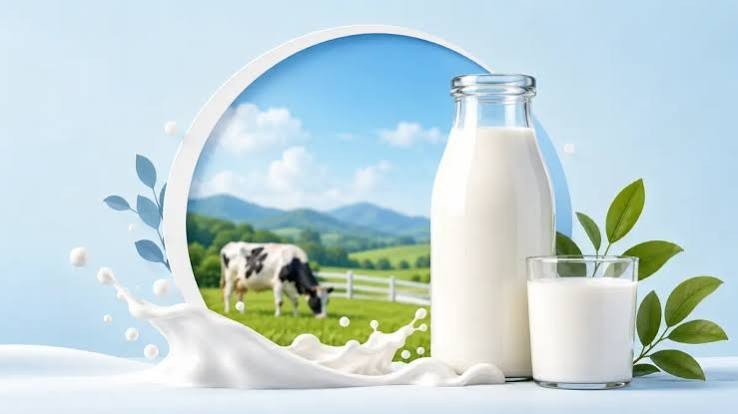
New Delhi: India's dairy sector continues to strengthen its position as the world's largest milk producer, with production reaching 247.87 million tonnes in 2024-25, a 69.41 per cent increase from 146.31 million tonnes in 2014-15. As the country observes National Milk Day on November 26, the sector's growth highlights the contribution of millions of dairy farmers, cooperative institutions and government-supported programmes to rural livelihoods and nutritional security.
Observed every year on November 26, National Milk Day commemorates the birth anniversary of Dr Verghese Kurien, widely recognised as the Father of India's White Revolution. The day celebrates his contribution to the dairy cooperative movement and acknowledges the role of farmers in building India's dairy industry.
According to figures released by the Ministry of Fisheries, Animal Husbandry and Dairying, India accounts for nearly one-fourth of global milk production. Milk production grew at a compound annual growth rate of 5.41 per cent between 2014-15 and 2024-25.
The country's per capita milk availability also increased by 52.03 per cent during the period, rising from 319 grams per person per day to 485 grams. Average bovine milk productivity increased from 1,640 kg per animal annually in 2014-15 to 2,800 kg in 2024-25.
Uttar Pradesh remained the largest milk-producing state, accounting for 15.66 per cent of national production, followed by Rajasthan (14.82 per cent), Madhya Pradesh (9.12 per cent), Gujarat (7.78 per cent) and Maharashtra (6.71 per cent). Together, these five states contributed 54.09 per cent of India's milk output.
Dairying remains an important source of income for rural households, supporting around 8.5 crore families. Women account for nearly 70 per cent of India's dairy farming workforce, underlining the sector's role in women's economic participation and rural development.
The cooperative structure has played a central role in connecting milk producers with organised markets. India's dairy cooperative network includes 22 milk federations, 241 district cooperative milk unions, 28 marketing dairies and 25 Milk Producer Organisations (MPOs). It covers approximately 2.45 lakh villages and has around 1.65 crore dairy farmers as members.
As of October 31, 2026, dairy cooperatives recorded daily milk procurement of 690.90 lakh kg and liquid milk sales of 462.95 lakh litres.
White Revolution 2.0, launched on December 25, 2024, aims to expand dairy cooperative coverage in villages and panchayats that remain outside the organised network. The initiative targets a 50 per cent increase in milk procurement by dairy cooperatives over five years.
By 2028-29, it aims to establish 75,000 new Dairy Cooperative Societies and strengthen 46,422 existing societies.
As of October 31, 2026, 24,097 new dairy cooperative societies had been formed, while 31,394 existing societies had been strengthened.
The National Dairy Development Board's subsidiary, NDDB Dairy Services, has also facilitated the establishment of 25 Milk Producer Organisations. Of these, 18 have an all-women membership, with women also serving as producer directors on their boards. These organisations cover more than 13 lakh milk producers across 175 districts in 12 states, with women accounting for around 78 per cent of their producer base. Together, the MPOs procure approximately 70 lakh litres of milk per day.
The National Programme for Dairy Development (NPDD) supports the expansion of milk procurement, processing, chilling, testing and marketing infrastructure. Its interventions include village-level milk collection systems, cold chains and quality testing facilities.
As of October 31, 2026, the programme had supported the organisation or revival of 40,800 dairy cooperative societies. It had also helped create 168 lakh litres per day of milk chilling capacity and facilitated the distribution of 94,000 milk quality testing devices.
The Rashtriya Gokul Mission, launched in December 2014, focuses on the conservation and scientific development of indigenous bovine breeds and improving animal productivity. Its interventions include artificial insemination, breed improvement, sex-sorted semen and in-vitro fertilisation technology.
Under the mission, 50,023 Multi-Purpose Artificial Insemination Technicians have been trained and equipped, while 24 IVF laboratories have been established. Separately, the Nationwide Artificial Insemination Programme has recorded more than 18.71 crore artificial inseminations, covering nearly 11.17 crore animals.
Animal healthcare is another focus area. As of October 31, 2026, 4,019 Mobile Veterinary Units were operational across 29 states and Union Territories. These units had provided doorstep veterinary services to around 1.5 crore farmers and treated approximately 3.3 crore animals.
Alongside production and infrastructure, sustainability is emerging as an important part of India's dairy development strategy. White Revolution 2.0 promotes the use of cattle dung and agricultural residues to produce biogas, organic manure and bio-fertilisers.
The GOBARdhan initiative, originally launched in 2018 under the Swachh Bharat Mission (Grameen), supports the conversion of organic waste into biogas and bio-slurry. The government has also announced a National Circular Bioenergy Scheme, with an outlay of ₹23,731 crore for the period from 2026-27 to 2035-36, to scale up domestic compressed biogas production.
The Animal Husbandry Infrastructure Development Fund is supporting investments in dairy processing, value addition and cold-chain infrastructure. Since 2020-21, 258 dairy processing plants in the private and cooperative sectors have received support under the fund, leveraging investments of approximately ₹21,797 crore.
India's dairy industry is also strengthening its presence in international markets. During 2025-26, the country exported 97,524.82 metric tonnes of dairy products, earning USD 407.12 million. Major destinations included the UAE, Saudi Arabia, the United States, Bhutan and Bahrain.
As National Milk Day recognises the legacy of Dr Verghese Kurien, the sector's progress also reflects the work of millions of dairy farmers and cooperative institutions. Sustaining this growth will depend on improving animal productivity, strengthening market access, expanding infrastructure and ensuring better returns for producers while addressing the environmental challenges associated with dairy farming.





.jpg)