Facebook
 Linked In
 Twitter
 YouTube

Navneet Anand & Priya Singh
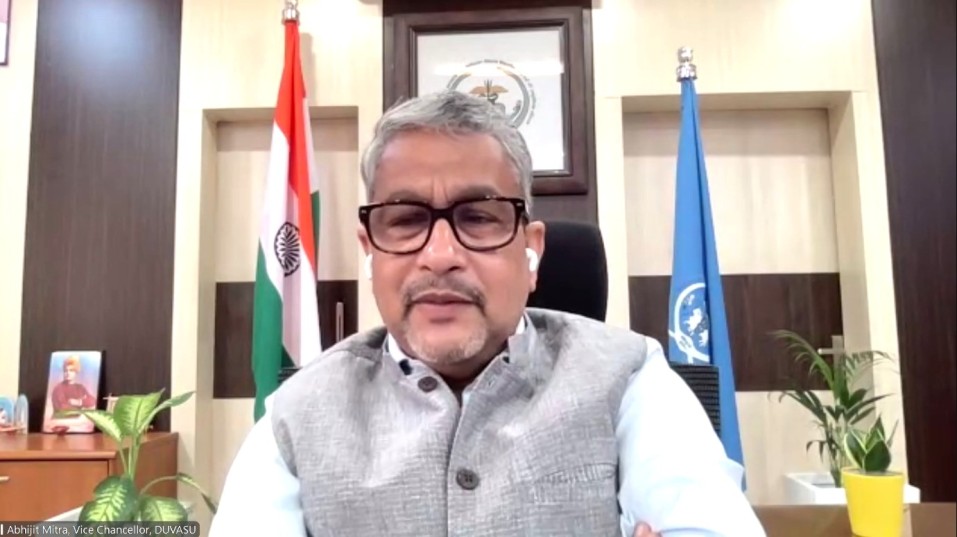
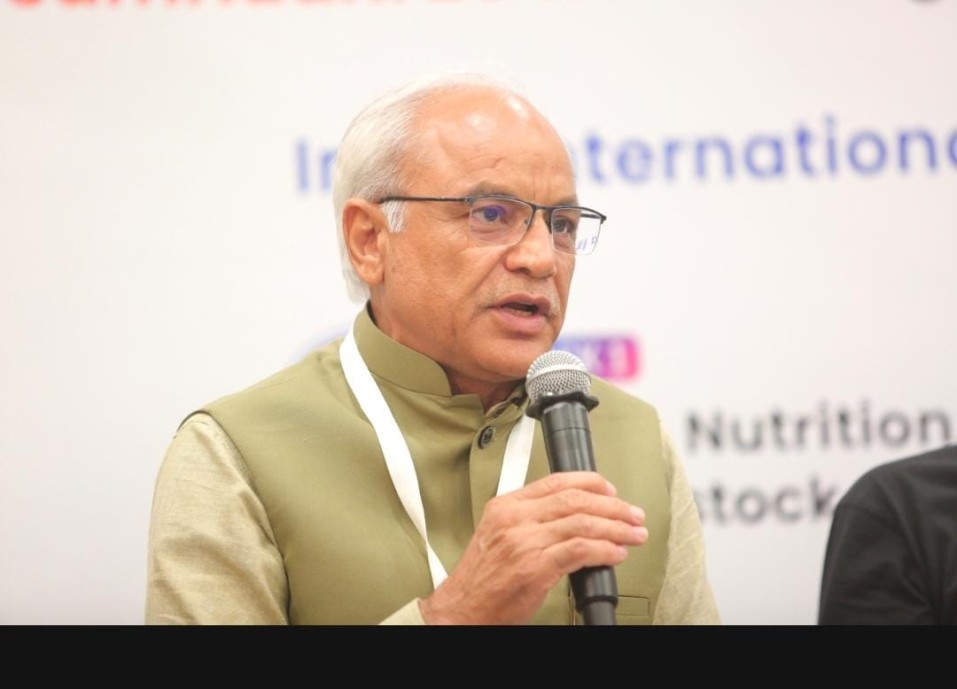
In an exclusive conversation with Dr Navneet Anand, Editor of IndiAgri, Prof. Abhijit Mitra, Vice Chancellor, DUVASU (Pt Deen Dayal Upadhyaya Pashu Chikitsa Vigyan Vishwavidyalaya Evam Go-Anusandhan Sansthan), Mathura and former Animal Husbandry Commissioner, Government of India, discusses the transformation of India’s livestock sector, the economics of dairy farming, lifetime animal performance, genomics, artificial intelligence, disease surveillance and the role of livestock in building Viksit Bharat 2047.
With more than three decades at the intersection of veterinary science, animal health, public health, food security and livestock policy, Prof. Mitra has held several key positions, including Animal Husbandry Commissioner and India’s Chief Veterinary Officer. He has also been associated with national and international initiatives on One Health, animal disease control and livestock development.
Priya Singh compiles the excerpts collated from the conversation.
“The livestock sector is no longer a subsidiary of crop agriculture”
Q. You have worked across veterinary science, livestock policy, research and academic leadership. Looking back at this long journey, what is the biggest change you have seen in India’s livestock and agricultural sector? And how is it aligned with the vision of Viksit Bharat 2047?
Prof. Mitra: I joined this sector as a student in 1982, so it has been quite a long journey. The biggest change I have seen is that the livestock sector is no longer viewed as a subsidiary of crop agriculture. It is now recognised as a promising sector in its own right. It is often described as a sunrise sector and is increasingly recognised as an important economic, nutritional and livelihood sector.
If we look at its share in agriculture and allied Gross Value Added (GVA), it was a little over 24% in 2014-15 and has increased to nearly 30.87% in 2023-24. This itself shows how significantly livestock is contributing.
What I see now is a transformative transition. The focus is moving from measuring national production to measuring farmers’ net returns and the lifetime performance of animals.
We must ask whether an animal is healthy, fertile and resilient, and whether the farmer is receiving a remunerative margin. The future is therefore not about production alone. It is about productivity, profitability and resilience at the level of the individual farmer.
“The HPAI-free poultry compartment programme gives me a special sense of satisfaction”
Q. During your tenure and long career, you have been associated with both the Pandemic Fund Animal Health Project and the development of India’s HPAI-free poultry compartments. Which achievement gives you greater satisfaction and why?
Prof. Mitra: The HPAI-free poultry compartment programme gives me a special sense of satisfaction.
When I took charge as Animal Husbandry Commissioner of India, there were no HPAI-free poultry compartments notified through the World Organisation for Animal Health’s self-declaration mechanism. By the time I demitted office, nearly a year ago, the number had reached 44. It has now gone beyond 50.
It was a collective achievement involving the government, scientific institutions and industry. It created a credible biosecurity mechanism that supports continuity of safe trade, which was very important.
The $25 million Pandemic Fund project also gives me satisfaction for a related reason. It placed animal health firmly within India’s One Health and pandemic preparedness architecture. During the G20, One Health received greater attention, with animal health emerging as one of its important drivers.
In both cases, my greatest satisfaction was that the technical work and knowledge we had developed became part of national mechanisms that continue to deliver even after one’s own role has ended. That is the greatest satisfaction for me.
“Livestock can become a major driver of farm income”
Q. What would make livestock a more reliable source of higher and stable income for India’s smallholder farmers?
Prof. Mitra: The fabric of India’s livestock sector is very unique because it is dominated by smallholder livestock keepers. Livestock can become a major driver of farm income, particularly for smallholders, women and marginal households.
Crops generally provide seasonal income, whereas milk, eggs, sheep and goats, and backyard poultry can provide a much more regular cash flow. Livestock also converts crop residues and locally available biomass, which may otherwise have limited use, into food and income.
The scale of the sector already demonstrates the opportunity. As of 2023-24, the value of milk output was more than Rs 12 lakh crore, higher than the combined value of wheat, rice, maize and sugarcane. That demonstrates the enormous scale of the sector. The next step is to ensure that an increasing share of this value translates into higher and more stable net income for producers.
Farmers earn from what remains after the cost of feed, breeding, disease management, mortality and market access. Therefore, livestock cannot be treated as an isolated intervention.
Better genetics must be combined with balanced feeding, preventive healthcare, timely breeding services, processing and assured markets. When the entire value chain works, livestock does not remain a supplementary source of income. It can become one of the household’s most dependable economic assets.
“Breed and reward animals for lifetime economic performance”
Q. How should the lifetime economic performance of dairy animals be assessed beyond milk yield alone?
Prof. Mitra: For whatever reason, the cow and buffalo have largely been equated with milk. The time has come to look at performance beyond milk production.
The first step is to change what we record and how we record it. Along with milk yield, every identified animal should have a simple longitudinal record covering age at first calving, calving interval, number of completed lactations, disease episodes, treatment and vaccination costs, survival and performance under heat stress.
This data should follow the animal rather than remain in separate programme registers.
India has already developed important foundations through animal identification, performance recording and genomics. So far, more than 75,000 animals have been genotyped to build a reference population.
The next important step is to utilise genomics alongside phenomics, meaning the actual traits of the animals. This can help give appropriate weight to fertility, functional longevity, disease resistance and adaptability in breeding values and selection indices.
The information must also return to farmers in a usable form. A farmer may want to know the expected lifetime margin from an animal. Digital identification, milk records and veterinary history can support this, but field recording must remain simple.
The principle is straightforward: breed and reward animals for lifetime economic performance, not just one impressive lactation.
“The objective should be more net income from each animal”
Q. India’s milk production has grown substantially. What is needed to translate that growth into better and more stable net returns for small dairy farmers?
Prof. Mitra: Milk production has increased significantly. Over the last 10 to 11 years, output has increased by more than 69%, nearly 70%. The next phase should ensure that this strong foundation translates into a higher and more stable net margin for small dairy households.
That requires better management, particularly of feed costs. Around 65% of total animal husbandry costs go towards feeding. Fertility management, animal health services, milk quality and market returns are also important.
At farm level, we should measure income over feed cost, calving interval, the number of days an animal remains in milk, expenditure on animal healthcare and productive life. It is easy to achieve a quick gain by simply adding another animal. But improving the performance and health of animals already present in the herd can bring better income.
Balanced rations using local resources, timely pregnancy diagnosis, timely artificial insemination, mastitis control, heat-stress management and dependable veterinary services can materially improve margins. The Government is already working in this direction through the 1962 helpline, mobile veterinary units and Pashu Sakhis.
The market side is equally important. Transparent, quality-based milk pricing, chilling and aggregation through cooperatives or producer organisations, and value addition are essential. The objective should not simply be how much milk an animal produces or how much milk is added to the national total. The objective should be more net income from each animal.
“Think of villages as a large farm”
Q. How can AI, genomics and precision livestock tools become affordable and practical for farmers who own only two or three animals?
Prof. Mitra: Around 85% of production comes from smallholder livestock keepers. The bulk of production is produced by the masses.
What is a large farm? It is an accumulation of a large number of animals within a geographical boundary. Instead of thinking about a farm as something owned by one individual, we can consider one or two villages, where different households own the animals, as a geographical farm.
I may have two animals and you may have five, but if we consider them collectively as a large farm, it becomes much easier to apply AI and genomics tools.
It is largely a matter of policy and implementation. We can consider a village, two villages or even a block as a farm and use inputs and information collectively. Artificial intelligence can then help gather and analyse information so that decisions are based on evidence rather than perception.
Digital animal identification has already started. Artificial intelligence has been linked with the National Digital Livestock Mission (NDLM), while vaccination and treatment history are becoming part of the digitisation process.
More than 4,000 mobile veterinary units are operating through the 1962 helpline. They have treated around 245 lakh animals and reached nearly 120 lakh farmers. The next step is to layer validated digital and precision services onto such shared platforms.
But there is one important principle. Algorithms should support, not replace, clinical judgement. Data must be reliable, and farmers must understand how their data is being used. The real test of technology is not how advanced it is. The test is whether it reduces costs, prevents losses and improves income for the last farmer standing in the queue.
“How early did we detect, how fast did we act?”
Q. India has expanded vaccination, surveillance and veterinary infrastructure. What more is needed to make disease detection and response consistently effective at the last mile?
Prof. Mitra: I feel proud, not only as a former Animal Husbandry Commissioner but as a citizen and veterinarian, that India has established a strong national architecture through large-scale vaccination, strengthened laboratory networks, digital reporting and mobile veterinary services.
Under the National Animal Disease Control Programme, more than 125 crore FMD vaccine doses have been administered. That is unprecedented in scale. The challenge now is consistency at the last mile, particularly effective coverage, post-vaccination monitoring, timely disease reporting, efficient sample transport, rapid laboratory turnaround and prompt field response.
A system similar to what we see in human healthcare, where samples can be collected and reports generated within hours, is also being developed for animal health. The next step is risk-based and real-time surveillance supported by trained field personnel connected with laboratories, stronger biosecurity, assured vaccine quality and community engagement.
We should judge the system by three questions: How early did we detect the disease? How fast did we act? And how much farmer loss did we prevent? If we can answer these three questions positively, the next phase of animal health preparedness will be much stronger.
“The biggest constraint is low and unstable net margin per animal”
Q. If you could identify only one constraint limiting the income of India’s small dairy farmers, what would it be?
Prof. Mitra: In my view, the biggest constraint is the low and unstable net margin per animal.
We often focus on milk yield while giving less attention to feed costs, mastitis-related losses, treatment expenditure and the actual price received by the farmer. Each of these factors determines how biological productivity translates into household income.
The underlying cause is a fragmented support system. The solution is a dependable local package covering feeding, preventive health, reproductive management, records, credit and assured market linkages.
Once we manage the margin rather than litres alone, productivity is more likely to translate into farmer profit. We should not always focus on how many eggs have been produced or how much milk has been produced. The focus should shift towards how much the farmer earns as a net margin after meeting all the expenses involved in maintaining the animal.
That is how we can develop a mechanism to increase the net margin per animal and improve smallholder farmers’ incomes.
“If given the opportunity, I would study veterinary science again”
Q. What is one thing you would like every young person entering agriculture and allied sectors today to understand?
Prof. Mitra: That is a difficult question because I entered this field in 1982. I have said this at many forums and I have no hesitation in repeating it.
I was studying Physics Honours and wanted to become a physicist. I had never studied biology before that. It was almost an accident that I entered this profession. But after more than four decades, if I am given an opportunity, I would choose veterinary science again in my next life.
Why? Because this sector gives you an opportunity to work at the intersection of science, people, animals, food security, public health and the economy. For young people entering agriculture today, I would say that agriculture and allied sectors are no longer traditional fields alone. They are becoming increasingly science-driven, technology-driven and economically important.
The opportunity is enormous, but the focus must remain on solving real problems for farmers and livestock keepers.
IndiAgri takeaway
Prof. Mitra’s central message throughout the conversation is clear: India’s livestock story cannot be measured by production numbers alone.
For the next phase of dairy and livestock development, the real indicators will be productivity, animal health, longevity, resilience and, most importantly, the net income left with the farmer.
That shift from “how much is produced” to “how much the farmer earns” could become one of the most important conversations for India’s livestock sector as the country works towards Viksit Bharat 2047.