Facebook
 Linked In
 Twitter
 YouTube

Priya Singh
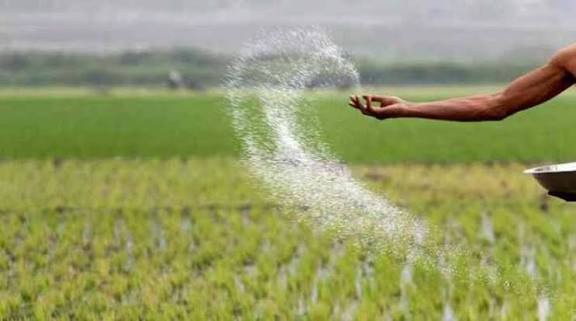
New Delhi: The Union Government has approved a fertiliser subsidy outlay of ₹62,370.02 crore for phosphatic and potassic (P&K) fertilisers for the Rabi 2026-27 season, marking a 64.3% increase over the ₹37,952.29 crore approved for the corresponding season last year.
The decision, cleared by the Union Cabinet chaired by Prime Minister Narendra Modi, comes against the backdrop of rising international fertiliser prices, supply-chain disruptions and higher input costs. The revised allocation is intended to ensure the availability of essential crop nutrients to farmers at subsidised and affordable rates.
The additional requirement amounts to approximately ₹24,417.73 crore compared with the previous Rabi season. The approved Nutrient-Based Subsidy (NBS) rates will remain applicable from October 1, 2026, to March 31, 2027, covering fertilisers such as Di-Ammonium Phosphate (DAP) and various NPKS grades.
Under the revised NBS framework, subsidy rates have been increased for nitrogen, phosphate and sulphur, while the rate for potash remains unchanged.
The revised per-kilogram nutrient subsidy rates for Rabi 2026-27 are:
Nitrogen: ₹94.21 per kg, compared with ₹43.02 previously.
Phosphate: ₹66.11 per kg, compared with ₹47.96 previously.
Potash: ₹2.38 per kg, unchanged.
Sulphur: ₹10.42 per kg, compared with ₹2.87 previously.
The sharpest increase has been provided for nitrogen and sulphur, reflecting the changing cost dynamics in international fertiliser markets and the rising prices of key raw materials.
Under the NBS scheme, the government provides nutrient-linked subsidies on 28 grades of P&K fertilisers through manufacturers and importers. The subsidy is calculated based on the nutrient composition of each fertiliser grade and is periodically revised in response to changes in domestic and international market conditions.
Alongside the higher subsidy allocation, the government has decided to continue special provisions to keep DAP affordable for farmers.
The retail price of a 50-kg bag of DAP will remain at ₹1,350, with the additional financial support provided over and above the regular NBS subsidy.
The government has also continued freight support for Single Super Phosphate (SSP), which is being promoted as a more affordable alternative to DAP. Subsidy support for imported and domestically produced ammonium sulphate will also continue during the season.
These measures are aimed at maintaining access to essential crop nutrients and limiting the impact of international price fluctuations on farmers' input expenditure.
The higher subsidy requirement reflects growing pressure on international fertiliser markets, particularly following geopolitical tensions in West Asia and disruptions to shipping routes.
Restrictions affecting movement through the Strait of Hormuz, an important route for global energy and fertiliser trade, have added uncertainty to the supply of fertilisers and critical raw materials.
Sulphur, an important input in phosphate fertiliser manufacturing, has faced significant supply constraints. Higher prices of phosphoric acid, ammonia and other imported inputs have also increased production costs.
India remains exposed to these developments because of its dependence on imports for several key fertiliser products and raw materials. The country imports a substantial share of its DAP requirements and relies almost entirely on overseas supplies of potash.
The rise in international prices has therefore increased the financial burden on the government, which is seeking to absorb much of the additional cost through subsidies rather than passing it on to farmers.
Despite concerns over international supply disruptions, India's overall fertiliser inventory has remained higher than last year's levels.
According to the Department of Fertilisers, total fertiliser stocks stood at 23.52 million tonnes as of November 10, 2026, compared with 17.35 million tonnes on the corresponding date last year, registering an increase of 35.6%.
Urea stocks increased by 42.9% to 10.31 million tonnes, while NPK stocks rose 43.4% to 6.09 million tonnes.
DAP inventories stood at 2.87 million tonnes, up 15.2% year-on-year. Stocks of Muriate of Potash (MOP) nearly doubled to 2.01 million tonnes.
However, Single Super Phosphate (SSP) stocks declined 3.2% to 2.25 million tonnes.
The higher inventory position provides some supply cushion for the ongoing agricultural season, although continued monitoring of distribution and availability remains important.
The increased allocation also highlights the growing fiscal implications of maintaining affordable fertiliser prices amid international market volatility.
The Union Budget 2026-27 had earmarked approximately ₹1.71 lakh crore for the overall fertiliser subsidy, including around ₹1.16 lakh crore for urea and ₹54,000 crore for P&K fertilisers.
However, the combined approved P&K subsidy requirement for the Kharif and Rabi seasons has now reached approximately ₹1.04 lakh crore, substantially exceeding the original annual provision for the NBS component.
This indicates the extent to which global price movements and supply disruptions can affect India's fertiliser subsidy expenditure.
The higher subsidy allocation reflects the government's effort to insulate farmers from rising international fertiliser costs and maintain access to essential agricultural inputs during the Rabi season.
For the farming community, the continuity of affordable DAP supplies and higher nutrient-based support will be important for managing cultivation costs.
At the same time, India's dependence on imported fertilisers and raw materials underlines the need to strengthen domestic production capabilities, diversify sourcing arrangements and improve supply-chain resilience.
As international markets remain volatile, ensuring timely fertiliser availability at affordable prices will continue to be an important factor in supporting agricultural production and protecting farm economics.



.jpeg)