Facebook
 Linked In
 Twitter
 YouTube

IndiAgri Bureau
New Delhi: KRIBHCO is strengthening India’s journey towards fertiliser self-reliance through its cooperative network, free soil-testing services, farmer-skilling programmes and field-level advisory initiatives. At a webinar organised by GreyMatters Communications in partnership with Fijeeha (Forum for Indian Journalists on Education, Environment, Health & Agriculture), the cooperative highlighted the importance of combining reliable fertiliser supplies with better soil health and balanced nutrient management to support farmers and strengthen India’s agricultural security.
Titled ‘Fertiliser Security to Self-Reliance: How India is Building an Atmanirbhar Fertiliser Sector Amid Global Disruptions’, the webinar examined how India can build a resilient fertiliser ecosystem amid geopolitical tensions, global supply-chain disruptions and volatility in energy and raw material prices.
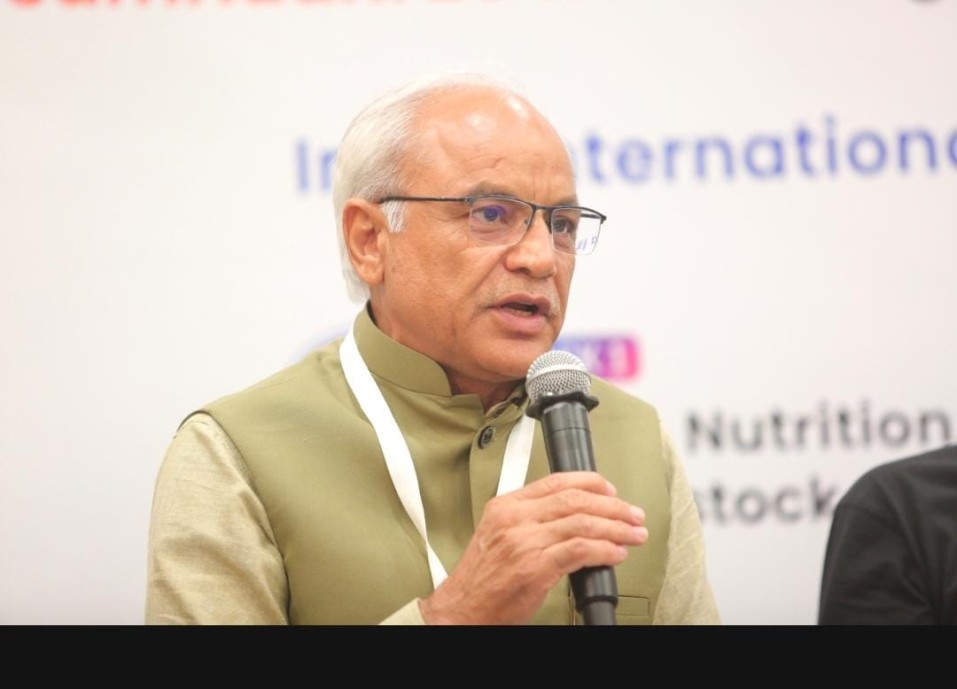
The discussion featured Gajendra Kumar, Joint General Manager, KRIBHCO; Kishore Jaiswal, National Convenor, National Farmers Empowerment Initiative (NFEI); and Ashish Paliwal, Advisor, IndiAgri. It was moderated by Dr Navneet Anand, Director, GreyMatters Communications.
Kumar highlighted KRIBHCO’s role in connecting fertiliser availability with farmer services and awareness. Its cooperative network, comprising 9,675 member Primary Agricultural Cooperative Societies, provides an important platform for taking agricultural inputs, advisory services and farmer support closer to the field.
KRIBHCO has tested 4.75 lakh soil samples free of cost at its advanced soil-testing laboratory in Noida, with each test valued at approximately Rs 1,500. The cooperative has also conducted 1.34 lakh farmer-skilling programmes. Its Krishi Paramarsh Kendras and village adoption clusters, covering four to five villages, further support farmers through access to inputs, advisory services and credit linkages.
“Farmers are central to our model. Self-reliance in fertilisers will come from domestic production, diversified imports, long-term contracts and, above all, teaching farmers to use fertilisers in a balanced way,” Kumar said.
He also stressed the need to reduce production costs and improve agricultural productivity to support farm incomes, particularly amid uncertain market prices and persistent productivity challenges in several areas.
The panel emphasised that fertiliser security must go beyond ensuring adequate supplies. Soil health, nutrient-use efficiency and the correct application of fertilisers are equally important to sustaining agricultural productivity.
The discussion highlighted concerns around declining soil quality and low soil organic carbon, which can affect nutrient-use efficiency and increase the need for better soil management practices.
Kishore Jaiswal stressed the importance of ensuring that farmers receive the right inputs at the right time and in the right quantity. He underlined the need to improve awareness of micronutrients, soil health and scientific fertiliser application, particularly as climate change adds to farming challenges.
He also pointed to the role of state agricultural universities and local-language WhatsApp groups in improving farmer outreach. Welcoming KRIBHCO’s demonstration plots, he said field-level demonstrations help farmers understand and adopt better agricultural practices.
Ashish Paliwal outlined a five-point approach to strengthening India’s fertiliser security: stronger domestic production, diversified global sourcing, strategic reserves, resilient last-mile logistics and predictable policy support.
He also emphasised the importance of balanced fertilisation, biofertilisers and organic inputs in building a more sustainable nutrient ecosystem.
The discussion placed India’s fertiliser strategy within the broader vision of Aatmanirbhar Bharat, highlighting that self-reliance requires both stronger domestic capabilities and preparedness for global supply disruptions. Strategic imports and long-term international partnerships will continue to have a role alongside domestic production.
The panellists agreed that ensuring reliable fertiliser availability, improving soil health, promoting efficient nutrient use and strengthening farmer awareness must go hand in hand.
The webinar concluded that fertiliser self-reliance is not measured by domestic production alone. It also depends on how efficiently fertilisers reach farmers, how effectively nutrients are used and how well the supply chain responds to global uncertainties. These efforts are essential to strengthening India’s agricultural resilience and long-term food security.


.png)