Facebook
 Linked In
 Twitter
 YouTube

IndiAgri Bureau
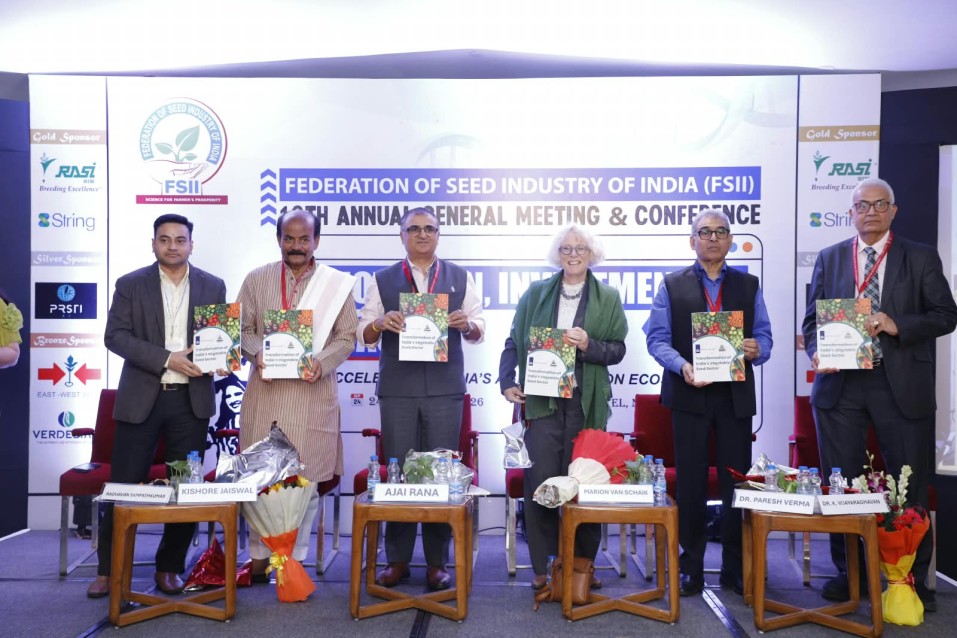
New Delhi: India's seed industry has welcomed the proposed single-window system for seed exports, calling it an important step towards reducing approval delays and strengthening the country's position in the global seed trade. Industry representatives have also sought a unified policy framework and closer coordination between government departments to help India emerge as a preferred destination for seed research, production, processing and exports.
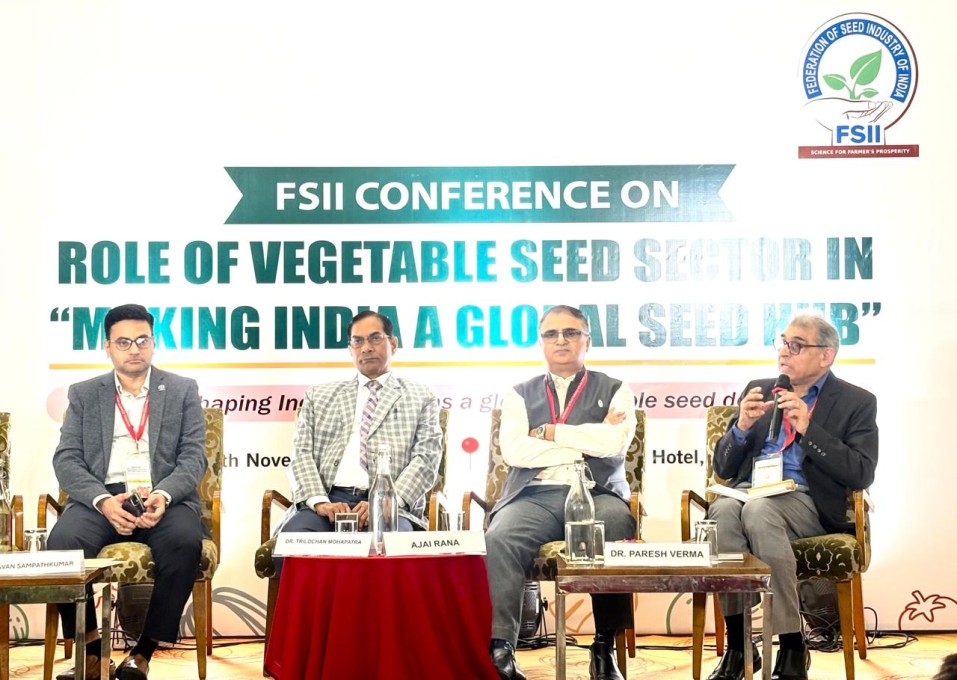
The concerns and recommendations were discussed at the second edition of the conference on the 'Role of Vegetable Seed Sector in Making India a Global Seed Hub', organised by the Federation of Seed Industry of India (FSII) in New Delhi on November 20. The conference brought together policymakers, seed companies, exporters and researchers to discuss opportunities and challenges facing the sector.
India's seed exports have recorded strong growth, rising from ₹2,323 crore in 2024-25 to ₹3,023 crore in 2025-26, an increase of around 30%, according to figures from the Ministry of Agriculture and Farmers Welfare.
Exports also remained significantly higher than imports, which stood at ₹1,756 crore in 2025-26.
Industry representatives said the growth provides an opportunity to expand India's presence in international markets, but improving competitiveness and easing regulatory processes will be essential to sustain the momentum.
Ajai Rana, Chairman of FSII and Managing Director and CEO of Savannah Seeds, said the conference reflected a clear consensus on the ambition to make India a global seed hub.
He welcomed the government's focus on global best practices and standards and highlighted the proposed five Centres of Excellence, including those focused on seed treatment and seed health, as important measures to strengthen India's export capabilities.
India currently accounts for less than 2% of global seed trade. The industry's ambition is to increase this share to 10%.
Participants welcomed several policy and procedural developments, including the proposed single-window system for seed exports, abolition of the EXIM Committee, integration of the SATHI platform with Directorate General of Foreign Trade (DGFT) processes, and continued issuance of electronic phytosanitary certificates.
Ajeet Kumar Sahu, Joint Secretary (Seeds), Ministry of Agriculture and Farmers Welfare, invited industry stakeholders to provide inputs for a Seed Export Promotion Policy based on a cluster approach.
Industry representatives said seed exports are governed by multiple regulatory frameworks covering seeds, biodiversity, intellectual property, plant variety protection and international trade. They called for a coordinated approach through a dedicated task force or export mission supported by inter-ministerial collaboration.
They also highlighted the importance of timely approvals, noting that seeds are living organisms and delays in clearances can affect their quality and export potential. A technology-driven single-window mechanism, they said, could help streamline processes and improve ease of doing business.
Beyond regulatory reforms, speakers stressed the need to strengthen India's domestic research and breeding capabilities.
Dr Trilochan Mohapatra, Chairperson of the Protection of Plant Varieties and Farmers' Rights Authority (PPV&FRA), urged the seed industry to invest more in indigenous research and innovation.
Drawing a comparison with India's pharmaceutical industry, he said the seed sector should move beyond importing parental lines and exporting multiplied seeds. Greater investment in molecular breeding, genomic selection and the development of varieties with improved nutrition and taste would help create distinctive Indian seed brands.
He also emphasised the need to translate discussions into concrete action to achieve the industry's ambition of becoming a global seed hub.
Summing up the discussions, Dr Paresh Verma, Director General of FSII, said stakeholders had expressed a shared commitment to strengthening India's seed export ecosystem.
He noted that the government had been receptive to the industry's concerns and that FSII would submit actionable recommendations, including proposals for a dedicated Seed Export Promotion Policy.
The discussions highlighted the need to combine regulatory efficiency, research investment, quality standards and coordinated policy support to expand India's role in global seed markets. With exports growing and the industry targeting a 10% share of global seed trade, the next phase will depend on how effectively these recommendations translate into policy and implementation.





.jpeg)