Facebook
 Linked In
 Twitter
 YouTube

Dr Navneet Anand
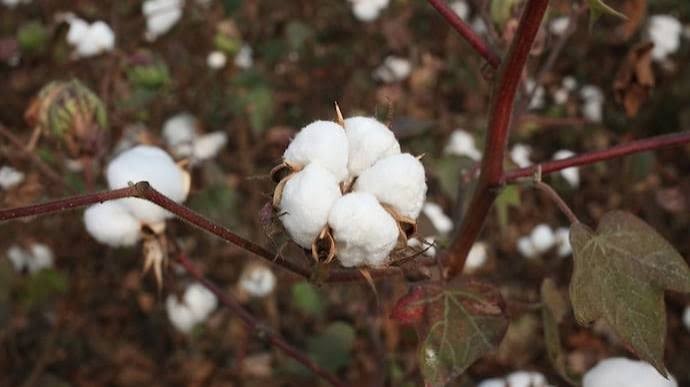
New Delhi: In March 2002, the Genetic Engineering Appraisal Committee cleared three Bt cotton hybrids for commercial cultivation. On World Cotton Day, it is worth recalling what that single approval did for Indian agriculture, and asking why the country has not built on it since.
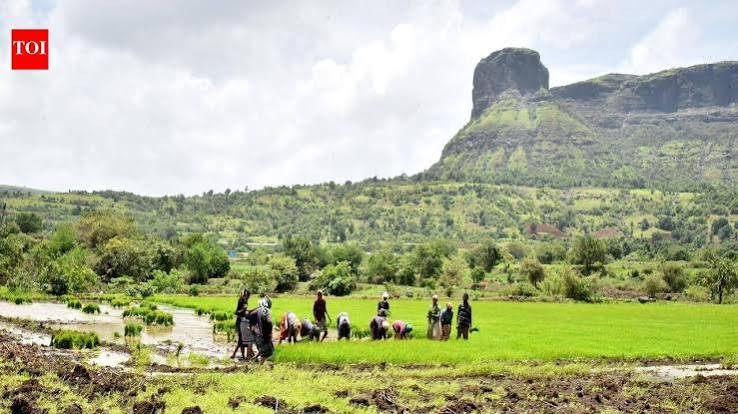
The numbers are well known but bear repeating. India produced about 1.4 crore bales of cotton in 2002-03. By 2013-14, output had touched nearly 4 crore bales. Yields rose from around 300 kg of lint per hectare to 566 kg. By 2020, Bt cotton covered 117.47 lakh of India's 125.84 lakh hectares under cotton, over 93% of the area, a pace of adoption few technologies anywhere have matched. Farmers did not need persuading. They saw the bollworm, which had ravaged the crop through the 1990s, brought under control, and they saw insecticide sprays fall sharply.
The gains were national as well as personal. A country that imported cotton became one of its largest exporters and, by 2015-16, the world's largest producer. Ginning, spinning and textile jobs grew on the back of a reliable domestic supply.
India's experience was no outlier. GM crops are the fastest-adopted agricultural technology in history. The global area under them has grown from 1.7 million hectares in 1996 to a record 216 million hectares in 2025, and 30 countries now grow 11 GM crops. Cotton is the most widely adopted of them: 77% of the world's cotton area is now GM.
According to the International Service for the Acquisition of Agri-biotech Applications (ISAAA), over 29 years farmers have planted a cumulative 3.48 billion hectares, earning an estimated $4.90 in extra income for every dollar spent on seed. ISAAA puts the cumulative gain in farm income at $385 billion, more than half of it in developing countries, and the reduction in pesticide active ingredients at 867 million kg. In India, though, the momentum stalled. The country has not approved a new GM cotton trait since Bollgard-II in 2006. In the twenty years since, the pink bollworm has developed resistance to the Bt proteins, weeds have grown costlier to control, and farm labour has grown scarce. Yields have slid below 450 kg a hectare, less than a quarter of China's. Production hovers around 3 crore bales, and the cotton import bill doubled to more than $1 billion in 2024-25. India still has the world's largest cotton acreage and remains the second-largest producer, but the gap between the two keeps widening.
Farmers have not waited for the system to catch up. A field study by the South Asia Biotechnology Centre (SABC), supported by the Federation of Seed Industry of India (FSII) and the National Seed Association of India (NSAI) and released in New Delhi on World Cotton Day, finds that unauthorised herbicide-tolerant Bt (HTBt) cotton was grown on 65 to 72 lakh acres in Kharif 2025-26, between a quarter and nearly a third of the national cotton area. The informal seed market is worth an estimated Rs 1500 crore. In Yavatmal, three of every four cotton fields carry the illegal trait; in Telangana's Mahabubabad, more than four in five.
The arithmetic explains why. Controlling weeds with glyphosate costs Rs 750 to 850 an acre. Manual weeding, when labour can be found at all, costs Rs 12,000 to 15,000. Faced with that choice, farmers are paying a premium to the black market for seed with no quality guarantee and no recourse if it fails. Laboratory tests found that 98% of field samples carried at least one GM trait, and 42% carried four, including Vip3A, an insect-resistance gene never approved in India. In the United States, more than 90% of cotton acreage is planted to herbicide-tolerant varieties and a similar share to Bt, according to the US Department of Agriculture, and 87% carries stacked traits. India, which has the world's largest GM cotton area, has not approved a single herbicide-tolerant or stacked variety. American farmers buy legally the very combination Indian farmers are buying on the black market.
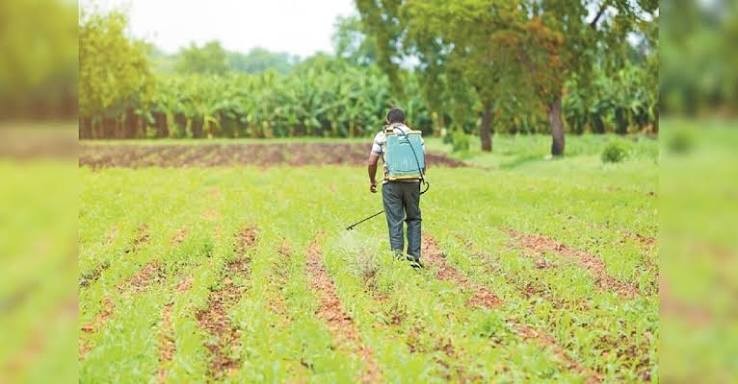
This is the real cost of regulatory paralysis. A technology the government has not cleared is already in the field, without stewardship, without refuge planting, and with glyphosate sold in 20-litre drums through underground networks. Unmonitored use of this kind is precisely how pests and weeds develop resistance. By withholding approval, the State has not kept HTBt out. It has only given up the ability to manage it.
The lesson reaches well beyond cotton. India spent Rs 1.61 lakh crore importing about 16 million tonnes of edible oil in 2024-25, more than the entire Union agriculture budget. Imports meet 55 to 60% of domestic demand, and that share includes GM soybean and canola oil from Argentina, Brazil, the United States and Canada. Indians already eat oil from GM crops; Indian farmers are simply not allowed to grow them.
GM mustard, DMH-11, was developed by Indian public-sector scientists at Delhi University with public money. The Centre told the Supreme Court it could raise yields by 25 to 30%. The GEAC cleared its environmental release in October 2022. The matter has since been stuck in a split verdict, and a national policy on GM crops, which both judges agreed India needs, has yet to be notified. Meanwhile the National Mission on Edible Oils needs oilseed output to grow roughly three times faster than it is growing now to meet its 2030-31 target.
Self-sufficiency in edible oil will not come from area expansion alone. It will need the same thing cotton needed in 2002: a science-based decision, taken on time, with proper safeguards in the field.
In 2013, the British environmentalist Mark Lynas, once a leading voice against GM crops, publicly reversed his position and later called the GMO controversy "one of the greatest science communications failures of the past half-century." India's debate has yet to make that turn. For too long it has been shaped by fear and misinformation rather than by evidence from its own fields.
What the cotton experience calls for is not complicated, and FSII and NSAI have set it out plainly. Approve BGII-RRF cotton so farmers can buy herbicide-tolerant seed from accountable sources, with stewardship built in. Bring glyphosate's in-crop use under a regulated label. Notify the national GM policy the Supreme Court asked for, with clear, time-bound approval pathways. And treat crops such as mustard on the evidence, not on the fears of the last debate.
Bt cotton proved that Indian farmers will take up good technology quickly and use it well. The illegal HTBt fields prove they will find it on their own when the State will not provide it. The choice before policymakers is whether the next generation of crop technology reaches farmers through regulated channels, or through the black market.