Facebook
 Linked In
 Twitter
 YouTube

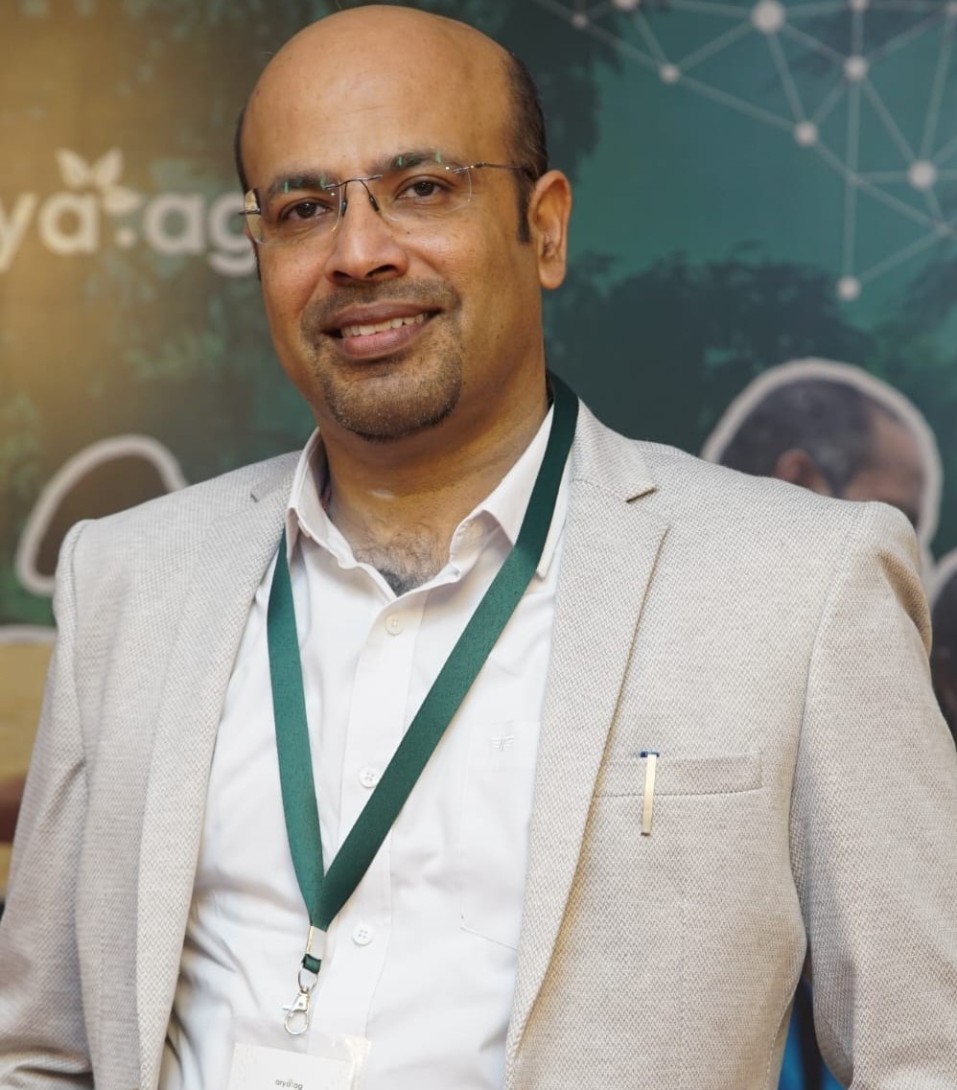
Anand Chandra
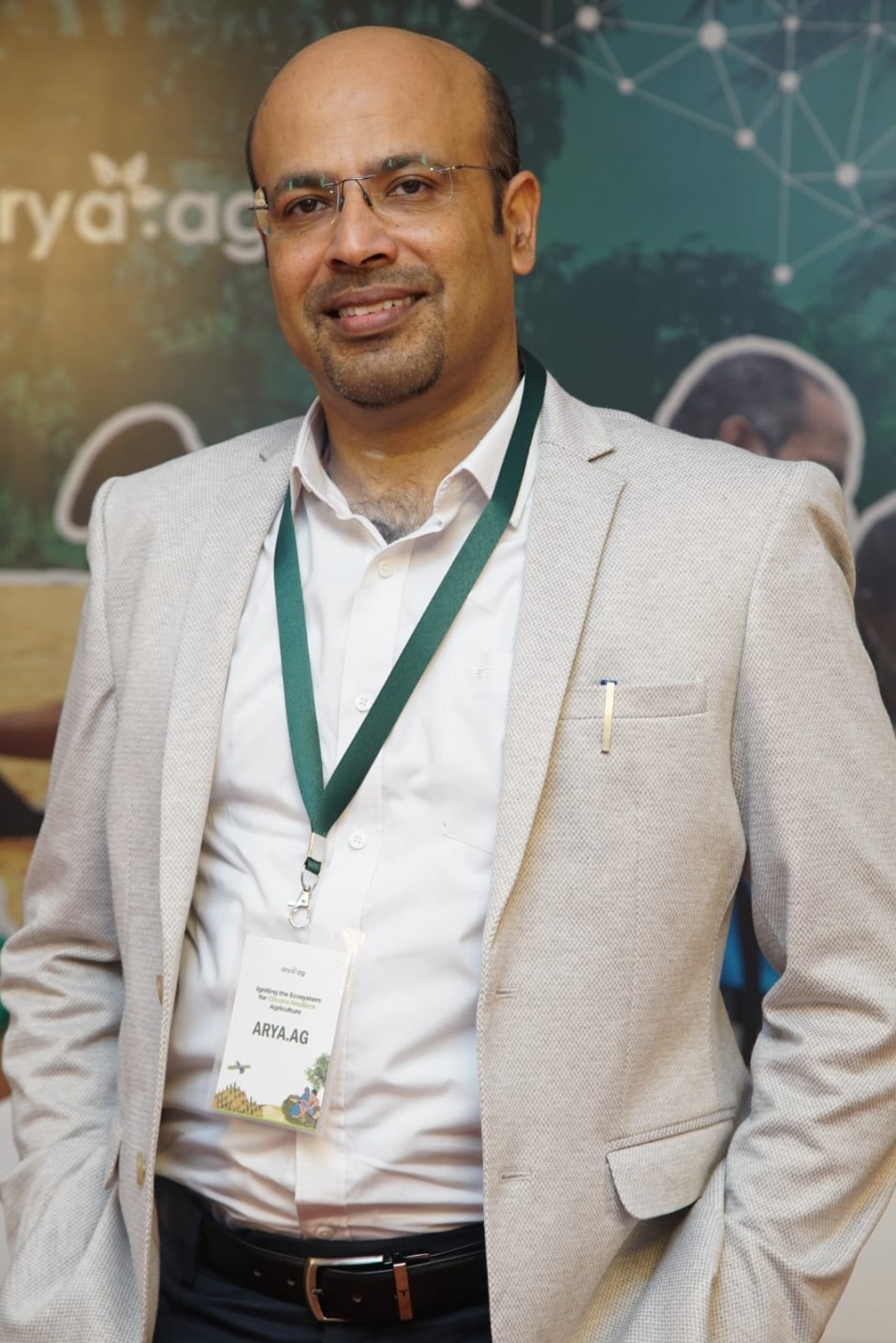
When Anand Chandra chose a career in agriculture, few people saw it as an attractive field. He saw it differently. "Agriculture is one of the most stable and demanding sectors for the coming years," he says. "It will always remain essential to the economy."
Chandra, Co-founder and Chief Operating Officer of Arya.ag, studied Agricultural Sciences and then did an MBA in Agribusiness Management from MANAGE. What drew him in was a gap he kept noticing. "There were plenty of ideas and discussions about solutions, but execution was often lacking," he says.
He also refused to see middlemen as villains. "The existing supply chain helps keep food affordable," he says. "We need to understand how the system works before trying to change it."
From a small start to steady profits
Chandra worked in agricultural commodity finance at ICICI Bank. There he saw that farm lending was held back not just by a shortage of money, but by a lack of trust, infrastructure and information.
Arya Collateral, then part of the JM Baxi Group, was a service provider to the bank. Chandra and two colleagues approached the group's chairman with a plan to take over the business and run it more professionally. They bought a 65% stake and management control, and kept the name Arya.
When operations began in 2012-13, the company had only ₹1 crore in capital. Six rivals in warehousing each had more than ₹200 crore. "That forced us to build strong systems and focus on efficiency from day one," Chandra says
.
The discipline paid off. Arya.ag has been profitable since its first year. Through GST, demonetisation and the COVID-19 pandemic, it delayed staff salaries only once in 14 years, and that by a single day.
Chandra believes in profitable growth, not growth at any cost, and the company does not offer discounts just to win customers. "If a product is valuable, customers should be willing to pay for it," he says.
Taking storage closer to farmers
The company spotted a clear gap. Most of India's warehouses are near cities and large markets, while the places where crops are grown often have too few, and those that exist are small. A standard 10,000-tonne warehouse is too big for a single farmer producer organisation (FPO).
So Arya.ag built a model that works for warehouses of any size. Smaller facilities are grouped into clusters and managed with technology to keep costs and risks low. Each warehouse also becomes a point where farmers can get loans and reach buyers.
"We did not want to compete with middlemen or banks," Chandra says. "We created our own space by taking infrastructure to smaller towns and combining storage with finance." Farmers can store their crop, get money for urgent needs and sell later when prices improve.
Speed is central to the model. A farmer can get a loan in under 20 minutes. "We may not offer interest rates as low as banks, but we aim to be an alternative to local moneylenders," he says.
Credit for those left out
Bank loans usually need land papers, crop loan records or formal accounts, which many farmers do not have. Arya.ag lends against the stored crop instead. It checks the farmer's identity and credit details, and gives money based on the value of the produce.
The results are striking. More than 40% of the company's customers each year are taking formal credit for the first time. About 25% move on to banks every year after building a credit record with Arya.ag, often getting cheaper loans.
For the farmer, the process is simple. The storage agreement is done through an OTP on the phone. If the farmer is eligible, a loan sanction letter can be ready in two minutes, with the amount based on the crop's quality and price. Details arrive by SMS or WhatsApp, the farmer accepts digitally and the money reaches the bank account. Repayment can be made from home through UPI or net banking.
"We do not necessarily rely on disruptive technology," Chandra says. "We focus on solutions that are simple for the customer but have a big impact."
Three rules that build trust
Chandra names three principles the company will not compromise on. First, Arya.ag only provides services and never buys or sells crops itself. "The customer who stores produce with us should be free to trade it. We do not want to compete with our own customers."
Second, speed matters, as farmers may need money quickly for fertiliser or the next crop.
Third, transparency. Customers can see their loan, repayments and transactions on their phones. "When people understand what is happening to their produce and money, they trust the system," he says.
Selling at the right time
Helping farmers choose when to sell, and to whom, is at the heart of Arya.ag's work. Chandra gives an example from Bihar. When the maize market opened in May-June, the price was ₹20. Farmers needed cash to prepare for paddy sowing and might have had to sell at once. Those who stored their maize and took a loan against it could wait. When the price later rose to ₹27, the gain, after storage and other costs, was more than 25%.
A third-party study found that farmers using the model saw their incomes rise by about 15-20%. "The impact will not be the same for everyone," Chandra says, "but storage and finance give farmers the freedom to sell when the timing suits them."
What policy should change
Chandra says government support for farmers is necessary, as farming is not highly profitable anywhere in the world. But he believes the government should limit its own buying and selling of crops to what is needed for buffer stocks and food security, and let markets work better.
He suggests raising direct income support from ₹6,000 to ₹12,000-15,000 per farmer, linked to the size of landholding, with satellite and farm data used to target it well. He also wants the three farm laws, which were introduced but not implemented, to be brought back. "More competition and less uncertainty will bring more investment into agriculture," he says.
He also calls for better follow-through on schemes. Under the Gramin Bhandaran Yojana, warehouse capacity has grown, but individual owners still struggle to get bank loans.
There are positive signs. Agriculture has drawn more attention and investment over the past five to seven years, and Arya.ag itself has raised nearly ₹1,100 crore. "To keep this going, policy certainty is essential," Chandra says.
Looking ahead
With 15 agro-climatic zones, India can grow a wide range of crops. Chandra believes the country must plan better what it grows and when, to match its needs and global demand. "Food will play an increasingly important role in the world's economic and strategic future," he says.
Arya.ag's story is now taught through case studies at IIM Bangalore and Harvard. Chandra recalls telling his MBA classmates that his dream was to reach a point where he would not need an introduction. The recognition feels good, he says, but it is not the goal. "What matters most is the work we do and the impact we create."