Facebook
 Linked In
 Twitter
 YouTube

Navneet Anand
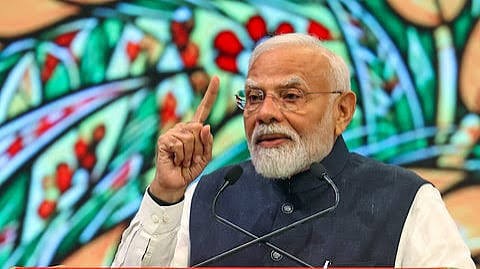
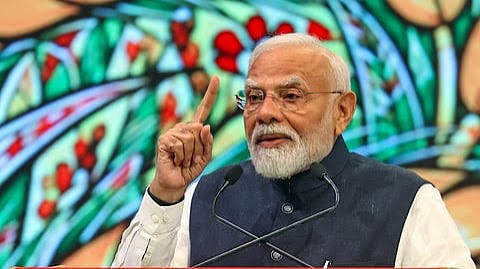
Two speeches by Prime Minister Narendra Modi this week, three days apart, tell the story of Indian agriculture over the past 12 years: how far it has come, and where it must go next. On 12 November, at a national agriculture conference in New Delhi, he spoke of a farm sector that has grown, diversified and gone global. On 15 November, Janjatiya Gaurav Diwas, he turned to the tribal and backward districts where that growth must now reach. Read together, they outline a vision that refuses to rest on past success and keeps pushing the frontier forward.
That vision has been steady since 2014, anchored in a simple idea: the farmer must sit at the centre of India’s growth story. The goal of doubling farmers’ income, set in 2016, changed the fundamental question farm policy asked. It was no longer only how much India grows, but how much the farmer earns. A chain of reforms followed: Soil Health Cards, crop insurance under the PM Fasal Bima Yojana, the e-NAM online market, MSP fixed at 1.5 times the cost of production and, from 2019, direct income support under PM-KISAN, which has now transferred over ₹4.6 lakh crore directly into farmers’ bank accounts. Foodgrain output, meanwhile, has climbed from 252 million tonnes in 2014-15 to a record 357 million tonnes in 2024-25.
The results are now visible on the world stage. India ranks first globally in milk, pulses, jute, rice and millets, and second in wheat, cotton, fruits, vegetables and fish. Farm exports have crossed ₹4 lakh crore a year. For the first time since Independence, agriculture has grown at an average rate of more than 4 per cent over a full decade. The Prime Minister linked this momentum to a World Bank study showing that about 50 crore Indians moved out of poverty in 12 to 13 years, marked by a sharp fall in rural poverty among small farmers and farm workers. Few numbers say more about the reach of farm-led growth.
Yet the Prime Minister was clear that output alone is not the destination. “Merely filling the granaries of food grains is not enough,” he said. The answer has been to widen the farmer’s income base through allied sectors. Creating a separate Ministry of Fisheries, Animal Husbandry and Dairying in 2019 gave these areas dedicated policy focus. Over the past decade, milk output has risen by nearly 70 per cent and egg production by nearly 90 per cent. Fish production has more than doubled, while honey output has grown from about 80,000 tonnes to 1.5 lakh tonnes. Alongside these White, Blue and Sweet Revolutions, the Prime Minister pointed to a new one. Nearly 12 lakh solar pumps under PM-KUSUM have cut power and diesel costs and turned the annadata, the food provider, into an urjadata, an energy provider.
Science and collective strength have carried this transformation to the field. Soil testing labs have expanded from a few hundred in 2014 to over 8,400, backed by 731 Krishi Vigyan Kendras across the country in the spirit of ‘Lab to Land’. Namo Drone Didis are spraying crops in villages once thought too remote for modern technology. A network of 10,000 Farmer Producer Organisations is turning small growers into value creators linked to food processing and export markets, while agri-startups and engineers build low-cost, sensor-based tools. The entire rural ecosystem is buzzing.
What stands out is that the Prime Minister does not treat this as a finished story. His Gadchiroli address on Janjatiya Gaurav Diwas carried this agenda into the regions that need it most. More than ₹1 lakh crore has been committed to PM-JANMAN and the Dharti Aaba Janjatiya Gram Utkarsh Abhiyan to uplift underserved tribal communities. Alongside, the PM Dhan-Dhaanya Krishi Yojana, with ₹24,000 crore a year for six years, converges 36 schemes across 11 ministries in 100 districts lagging in productivity, cropping intensity and credit, aiming to reach 1.7 crore farmers. Regions such as Gadchiroli, long held back by Naxal violence, are now opening up to roads, markets and investment.
This is where the two speeches meet. In rain-fed and tribal districts, the allied sectors celebrated in Delhi can deliver the biggest impact. A milch animal, a fish pond, a few beehives, a patch of Shri Anna or a sack of forest produce can transform a household’s income. FPOs and the newly launched tribal multipurpose marketing centres can connect that produce to larger markets. The tools that built India’s farm success are now being pointed directly at the places it has not yet fully reached.
For IndiAgri, these are familiar themes. Our National Sustainable Agriculture Summit began in 2024 with ‘Nurturing a Greener Tomorrow for Viksit Bharat’. In 2025, ‘Krishi 2047: Climate-Ready Farming, Future-Ready Bharat’ examined how agriculture can adapt to a changing climate. This year, we turned our focus to dairy and fisheries, two pillars at the heart of farm diversification, while six regional policy dialogues, from Rajasthan to Bihar, took these conversations directly to the states. Across every forum, the message from farmers, scientists and policymakers has been consistent: resilience comes from diversity, and policy works best when tailored to the region.
The Prime Minister ended his Delhi address by inviting fresh ideas from farmers and experts. The next chapter could see FPOs in the Dhan-Dhaanya districts linked to local processing and exports, allied activities packaged as ready income streams in tribal blocks, and the Lab to Land model extended to every last hamlet. Full granaries were yesterday’s goal; fuller lives and incomes are today’s. The momentum is here. The task now is to carry it to the last mile.