Facebook
 Linked In
 Twitter
 YouTube

Priya Singh
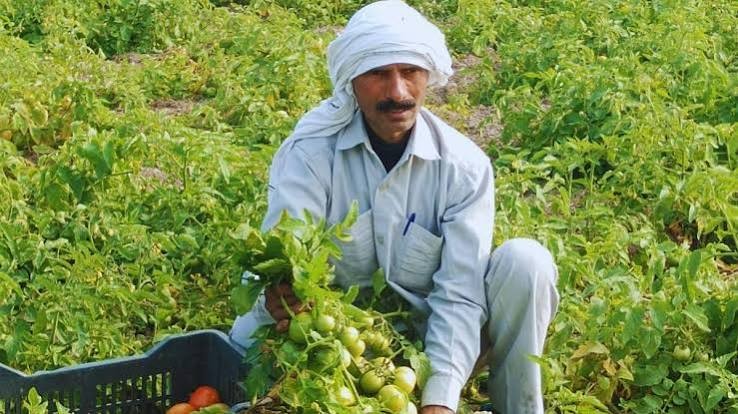
Rohtas, Bihar: In 1993, Dilip Kumar Singh began selling vegetables to support his family. Coming from a financially disadvantaged background, he had limited resources and no agricultural land of his own. What started as an effort to earn a living gradually turned into a journey of entrepreneurship, taking him from vegetable trading to managing nearly 100 acres of vegetable cultivation on leased land.
Today, Singh is recognised as a progressive farmer in Rohtas district of Bihar. According to information shared by Krishi Vigyan Kendra (KVK), Rohtas, he earns around ₹7-10 lakh annually from vegetable production and provides employment to 15,000-20,000 labourers every year through his farming operations.
His journey has been shaped by persistence, a willingness to learn and the ability to turn opportunities into a successful farming enterprise.
Born on January 1, 1972, Singh is the son of Sri Ram Vyas Singh and belongs to Mehaddiganj village near Sasaram in Rohtas district, Bihar.
Growing up in a poor family, he faced financial difficulties from an early age. He had to discontinue his studies after Intermediate and look for ways to support his family. In 1993, he started selling vegetables, hoping to earn enough to meet household expenses.
However, the income from vegetable trading was insufficient to support his family. He realised that he needed to explore another source of livelihood. With no land of his own, he took two acres on lease in Mishirpur village in Sasaram block and began cultivating vegetables.
It was a modest beginning, but the effort soon started paying off. Through hard work and careful cultivation, he managed to produce vegetables successfully and earn good returns. Encouraged by the results, he decided to expand his operations.
From two acres, Singh gradually moved to nearly 20 acres across Kuraich, Dyalpur, Lalganj, Neema, Kota, Suma and Jaynagar, all located near his native village in Sasaram block. The expansion helped him improve his family's living standards and build a stronger foundation in vegetable farming.
A significant turning point came in 2004, when Singh came in contact with Krishi Vigyan Kendra, Rohtas, Bikramganj.
Until then, much of his progress had come through personal effort and experience. His interaction with KVK scientists introduced him to scientific methods of vegetable cultivation and helped him improve his farming practices.
With technical guidance, he began cultivating a wider range of vegetables, including tomato, okra, cauliflower, brinjal, potato, onion, chilli, bottle gourd, bitter gourd and capsicum.
He also took the initiative to learn from other agricultural institutions. He received training in the latest techniques from the Indian Institute of Vegetable Research (IIVR), Varanasi, and the Department of Horticulture, Banaras Hindu University (BHU), Varanasi. These interactions helped him gain innovative knowledge, particularly in organic vegetable production.
With continued technical support from KVK Rohtas and Bihar Agricultural University (BAU), Sabour, Bhagalpur, Singh further expanded his farming operations.
He eventually began cultivating both organic and non-organic vegetables on nearly 100 acres of leased land. His annual income from vegetable production reached around ₹7-10 lakh. His farming activities also became an important source of employment, providing work to 15,000-20,000 labourers every year.
Singh's farming enterprise is built around crop diversity and improved farm management. Instead of depending on a single crop, he cultivates a wide range of vegetables, including potato, tomato, green chilli, onion, brinjal, okra, broccoli, cauliflower, capsicum, cowpea, coriander leaf, bitter gourd, bottle gourd, sponge gourd, cabbage, green pea, cucumber and radish.
His crop-wise production and income figures, as documented by KVK Rohtas, highlight the economic potential of this diversified approach.
Among the crops cultivated by him, potato varieties include R. Aloo-I, C-I and Lal Gulab. On one hectare, the reported yield was 375 quintals, with a productivity of 375 quintals per hectare. The gross income was ₹1,87,500 per hectare, against a cost of ₹50,000, resulting in a net income of ₹1,37,500 and a benefit-cost ratio of 2.7:1.
Tomato varieties Laxmi, Shahenshah and Badshah were cultivated over five hectares, with a reported yield of 500 quintals and productivity of 1,000 quintals per hectare. The gross income was ₹3,00,000 per hectare, while the cost was ₹62,500, giving a net income of ₹2,37,500 and a benefit-cost ratio of 3.8:1.
Green chilli varieties Deonoor Deluxe and Indira were grown on one hectare. The reported yield was 450 quintals, with productivity of 450 quintals per hectare. The crop generated a gross income of ₹3,60,000 per hectare and a net income of ₹2,60,000, with a benefit-cost ratio of 2.6:1.
Onion varieties Agrifound Light Red and N-53 were cultivated over four hectares, recording a yield of 1,400 quintals and productivity of 350 quintals per hectare. The gross income stood at ₹1,40,000 per hectare, with a cultivation cost of ₹44,000 and net income of ₹96,000. The benefit-cost ratio was 2.2:1.
For brinjal, varieties Rajani and Swarna Mani were grown over two hectares, with a yield of 1,000 quintals and productivity of 500 quintals per hectare. The crop generated a gross income of ₹2,00,000 per hectare and a net income of ₹1,50,000, with a benefit-cost ratio of 3.1:1.
Okra varieties Sonal, Sarika, Dipika, Sonakshi and Shakti were cultivated on 1.80 hectares. The reported yield was 540 quintals, with productivity of 300 quintals per hectare. The gross income was ₹1,80,000 per hectare, and the net income was ₹1,43,500, with a benefit-cost ratio of 3.8:1.
Broccoli, cultivated using the Ashwarya variety on 0.50 hectares, recorded a yield of 175 quintals and productivity of 350 quintals per hectare. It generated a gross income of ₹2,75,000 per hectare, with a cultivation cost of ₹30,000 and net income of ₹2,45,000. The benefit-cost ratio stood at 8.2:1.
Cauliflower varieties Sweta, Lucky and Madhuri were grown on one hectare. The reported yield was 350 quintals, with productivity of 350 quintals per hectare. The crop generated a gross income of ₹1,40,000 per hectare and a net income of ₹1,15,000, with a benefit-cost ratio of 4.6:1.
Capsicum emerged as one of the highest-returning crops in the recorded data. Varieties Swarna, Natasha and 623 were cultivated over 0.80 hectares, with a yield of 180 quintals and productivity of 300 quintals per hectare. The reported gross income was ₹4,50,000 per hectare, while the net income stood at ₹4,15,000, giving a benefit-cost ratio of 11.9:1.
Cowpea, using the Gomchi/Gomti variety, was grown on 0.60 hectares. It recorded a yield of 195 quintals and productivity of 225 quintals per hectare, generating a gross income of ₹1,35,000 per hectare and a net income of ₹1,05,000. Its benefit-cost ratio was 3.5:1.
Coriander leaf varieties Kargil and Surabhi were cultivated on one hectare, with a reported yield of 625 quintals and productivity of 150 quintals per hectare. The gross income was ₹1,50,000 per hectare, with a net income of ₹1,25,000 and a benefit-cost ratio of 5:1.
Bitter gourd, using the hybrid varieties Sankar and Chaman, was grown on 0.40 hectares. The reported yield was 130 quintals, with productivity of 325 quintals per hectare. It generated a gross income of ₹3,62,500 per hectare and a net income of ₹3,12,500, with a benefit-cost ratio of 6.3:1.
Bottle gourd varieties Barad and Kaveri were cultivated over 0.80 hectares, recording a yield of 500 quintals and productivity of 625 quintals per hectare. The gross income was ₹1,87,500 per hectare, and the net income was ₹1,50,500, with a benefit-cost ratio of 4:1.
Sponge gourd was grown on 0.40 hectares, with a reported yield of 460 quintals and productivity of 400 quintals per hectare. The crop generated a gross income of ₹2,40,000 per hectare and a net income of ₹2,17,500, with a benefit-cost ratio of 9.7:1.
Cabbage varieties Green Express, Alisah and Red Ball were cultivated on 0.80 hectares. The reported yield was 500 quintals, with productivity of 625 quintals per hectare. The gross income stood at ₹1,87,500 per hectare, with a net income of ₹1,50,500 and a benefit-cost ratio of 4:1.
Green pea was cultivated on 0.40 hectares, recording a yield of 30 quintals and productivity of 75 quintals per hectare. It generated a gross income of ₹90,000 per hectare and a net income of ₹65,000, with a benefit-cost ratio of 2.6:1.
Cucumber, also grown on 0.40 hectares, recorded a yield of 60 quintals and productivity of 150 quintals per hectare. The crop generated a gross income of ₹1,50,000 per hectare and a net income of ₹1,30,000, with a benefit-cost ratio of 6.5:1.
Radish was cultivated on 0.40 hectares, with a reported yield of 160 quintals and productivity of 400 quintals per hectare. It generated a gross income of ₹2,40,000 per hectare and a net income of ₹2,12,500, with a benefit-cost ratio of 7.7:1.
These figures, documented by KVK Rohtas, reflect the range of crops and returns associated with Singh's vegetable farming operations.
As his farming operations expanded, Singh's role also changed. He moved beyond being a vegetable grower to managing a large agricultural enterprise.
He introduced intercropping and mixed cropping practices and adopted timely preventive and curative measures for crop management. Managing cultivation across nearly 100 acres also required an organised workforce. To address this, he introduced a three-tier management system for human resources, along with effective labour management across his farming operations.
His experience and farming techniques have also reached other farmers in Bihar and beyond, helping spread knowledge of improved vegetable production practices.
Singh's efforts have earned recognition from several agricultural institutions and government bodies, including the State Government, Bihar Agricultural University, Sabour, Rajendra Agricultural University, Pusa, Samastipur, KVK Rohtas and the Indian Council of Agricultural Research (ICAR), New Delhi.
One of his most notable achievements was receiving the Jagjivan Ram Abhinav Kisan Puraskar for 2012-13, conferred by ICAR, New Delhi, in recognition of his contribution to agricultural development and innovative farming practices.
His progress has also brought improvements in his family's socio-economic condition, including education, healthcare, housing and other aspects of living standards.a
Dilip Kumar Singh's story is about more than expanding vegetable cultivation from two acres to nearly 100 acres. It is about a farmer who began with limited means, took land on lease when he had none of his own, learned new techniques and steadily built an enterprise through farming.
The technical support he received from KVK Rohtas, IIVR, BHU and BAU played an important role in his transition towards scientific and diversified vegetable cultivation.
From selling vegetables in 1993 to becoming an agri-entrepreneur who provides employment to thousands of labourers every year, Singh's journey highlights how determination, continuous learning and access to agricultural knowledge can create opportunities for farmers and rural communities.

.jpg)

.jpeg)