Facebook
 Linked In
 Twitter
 YouTube

IndiAgri Bureau
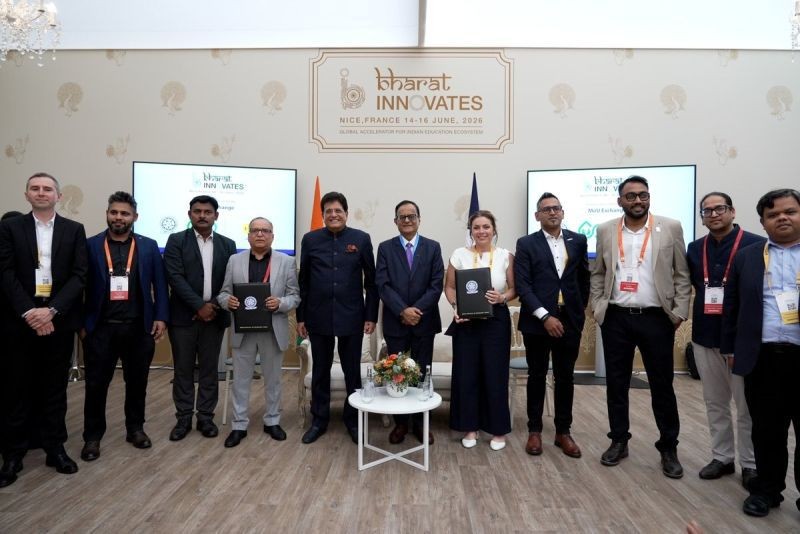
Nice, Switzerland / New Delhi – India’s agriculture sector is a global powerhouse, uniquely characterized by its massive scale, vast arable land, diverse agro-climatic zones and rich biodiversity. These strengths have propelled the country to become one of the world’s leading producers of crops such as rice and wheat. However, farmers in the country face significant challenges – from erratic monsoons, severe droughts and unseasonal rains compounded by El Nino, to pests and diseases that destroy an estimated 30 percent of crops annually. More than 80 percent of India’s estimated 150 million farming households are composed of smallholder farmers who operate on less than two hectares of land. This limits economies of scale, sets obstacles to the wider adoption of advanced technologies and could widen a systemic gap between large commercial agricultural operations and the bulk of its farming population.
Providing India’s farmers with free, real-time and personalized agricultural intelligence – at scale – could transform the country’s agriculture.
This vision is at the heart of an ambitious program called Annam.AI, which aims to build a nationwide agricultural intelligence backbone based on open data, that enables precision agriculture and fosters climate resilience. This would provide India’s farmers hyperlocal, AI-powered advisories that integrate crop intelligence, real-time microclimate data and multilingual engagement tools. Annam.AI (Alliance for Next-gen Nourishment through Agriculture Modernization, and denoting “food” in Sanskrit language) is backed by the Government of India through the Ministry of Education, the Ministry of Agriculture and Farmers Welfare, global technology partners such as Google, and is driven by IIT Ropar, a premier engineering and technology university in Punjab that is part of the prestigious Indian Institutes of Technology (IIT) system.
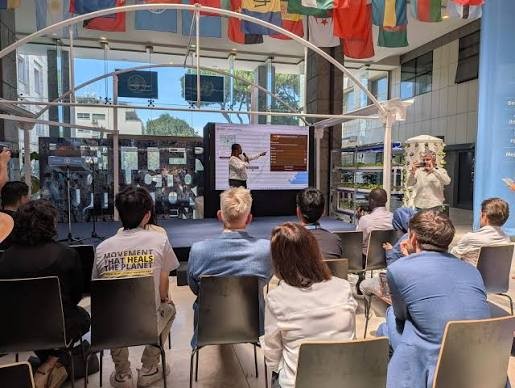
Syngenta, a global leader in agricultural innovation with a long-standing presence in India, today announced it has signed a Memorandum of Understanding to be a strategic partner in the Annam.AI program, at an event in Nice, France attended by India’s Prime Minister Narendra Modi and France’s President Emmanuel Macron. Syngenta is to leverage its R&D and agronomic expertise in building accurate crop health, pest forecasting and heat stress models.
Jeff Rowe, Syngenta Group’s Chief Executive Officer, said, “At Syngenta we're creating breakthroughs for farmers in every field, to deliver higher yields with lower impact. Annam.AI presents a unique opportunity to contribute to a transformative, digital foundation for Indian agriculture that will benefit more than 600 million people in this country. We are deeply honored to work with many talented and committed people in India’s government and universities, as well as with other innovation leaders in fulfilling this vision.
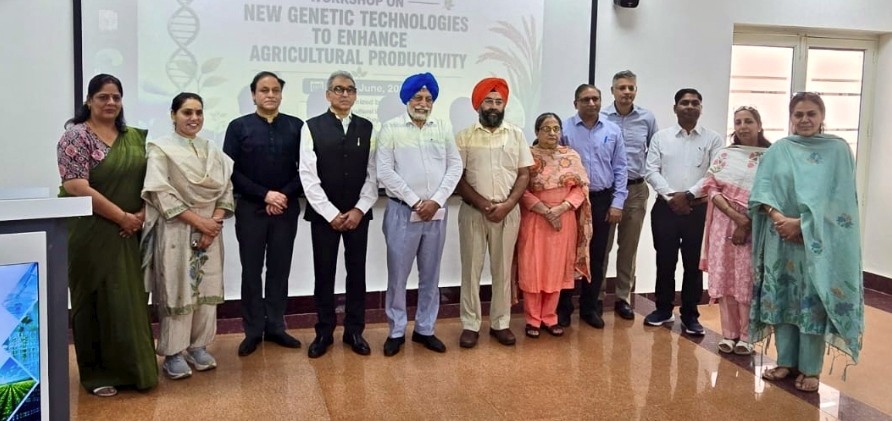
Commenting on the partnership, Prof. Rajeev Ahuja, Director, IIT Ropar, highlighted the growing role of artificial intelligence in transforming Indian agriculture. He noted that strong support from the Government of India and the vision of Prime Minister Shri Narendra Modi Ji have enabled the development of advanced AI ecosystems that convert research innovations into practical solutions for farmers. According to him, the collaboration between ANNAM.AI and Syngenta reflects how academia and industry can work together to accelerate the deployment of emerging technologies and create greater impact across the agricultural value chain.
Dr. Pushpendra Singh, who leads the ANNAM.AI project at IIT Ropar, described the collaboration as an opportunity to bridge artificial intelligence and agronomic knowledge to address key challenges facing Indian agriculture. He said the joint effort will focus on building predictive tools for crop health assessment, pest outbreaks, and climate-related stress, helping farmers respond proactively with data-backed recommendations and improve farm outcomes.


.jpeg)


.png)