Facebook
 Linked In
 Twitter
 YouTube

IndiAgri Bureau
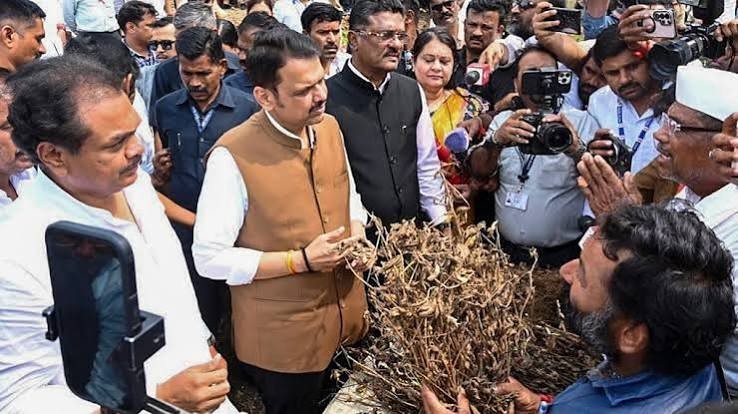
Mumbai: Maharashtra’s drought crisis has intensified pressure on the state government to provide greater financial support to farmers, with more than 12,000 cultivators recently marching towards Mumbai to demand adequate compensation, farm loan relief and the settlement of pending crop insurance claims. The protest was called off after a delegation met Chief Minister Devendra Fadnavis, who gave assurances on several of their demands.
The mobilisation, led by the All India Kisan Sabha (AIKS), highlighted concerns that the relief announced so far may not adequately address the losses faced by drought-affected farming households. Farmers also sought legal rights for people cultivating forest land, the release of pending instalments under the Namo Shetkari Mahasanman Nidhi Yojana, and changes to the farm loan waiver policy to include those who have regularly repaid their loans.
The protest came as Maharashtra expanded its drought response following deficient rainfall and crop damage across large parts of the state. The government has announced an advance payment of Rs 5,000 per eligible farmer before Diwali, while the process for assessing losses and securing additional assistance continues.
On October 27, the Maharashtra Cabinet approved Rs 7,500 crore for drought relief, including an advance payment of Rs 5,000 each for an estimated 1.5 crore farmers across 304 drought-affected talukas. The amount is to be transferred directly to eligible farmers’ bank accounts through the Direct Benefit Transfer system before Diwali, which falls on November 8.
Eligibility is linked to crop damage exceeding 33%, in line with the prescribed disaster-relief criteria. The state has excluded income-tax payers, government employees and officers, and public representatives from the assistance. Forest rights holder farmers who have not yet received an AgriStack Farmer ID can qualify based on their e-KYC.
The advance is intended to provide immediate support while crop-loss surveys and the process for determining the full extent of drought assistance are completed. According to the state government, surveys covering around 94% of affected farmers had been completed by October 27.
The funding includes Rs 2,000 crore from the Relief and Rehabilitation Department and Rs 5,500 crore from the Finance Department. The government is also examining requests to add more areas to the drought-affected list, including parts of Pune, Palghar, Raigad and Kolhapur districts.
For protesting farmers, the Rs 5,000 advance is only one part of a broader set of demands. The AIKS has called for compensation that reflects actual crop losses, faster settlement of pending crop insurance claims and a more inclusive approach to farm loan relief.
The organisation has also sought benefits for farmers who have consistently repaid their loans, arguing that they should not be excluded from relief measures simply because they do not have overdue debt. Other demands concern forest-land ownership rights, pending income-support payments and social security for rural workers.
The march followed a five-day protest in Akole before farmers began moving towards Mumbai along the Nashik–Mumbai highway. Following a meeting with the farmers’ delegation, the state government indicated that it would consider their concerns and examine several proposals.
The state has also sought a Rs 17,500 crore relief package from the Union government, including Rs 13,000 crore for crop losses and Rs 4,500 crore for fodder management. A central inter-ministerial team has visited affected areas to assess the situation.
Alongside cash assistance, the state’s drought response includes measures related to crop loans, water supply and fodder availability. Authorities have increased tanker deployment in water-stressed areas and introduced GPS tracking to monitor distribution. The government has also emphasised fodder procurement and cultivation to support livestock during the crisis.
However, the effectiveness of these measures will depend on timely payments, transparent crop-loss assessments and clear communication about eligibility. Farmers facing losses across successive crop seasons need to know when assistance will reach them and how pending insurance claims and other dues will be addressed.
The Rs 5,000 advance offers immediate financial support, but the demands raised during the Mumbai march underline the wider challenges facing drought-hit farming communities. The next test for the state government will be translating its assurances into time-bound action on compensation, insurance payments, debt relief and access to essential resources.







.png)