Facebook
 Linked In
 Twitter
 YouTube
Priya Singh
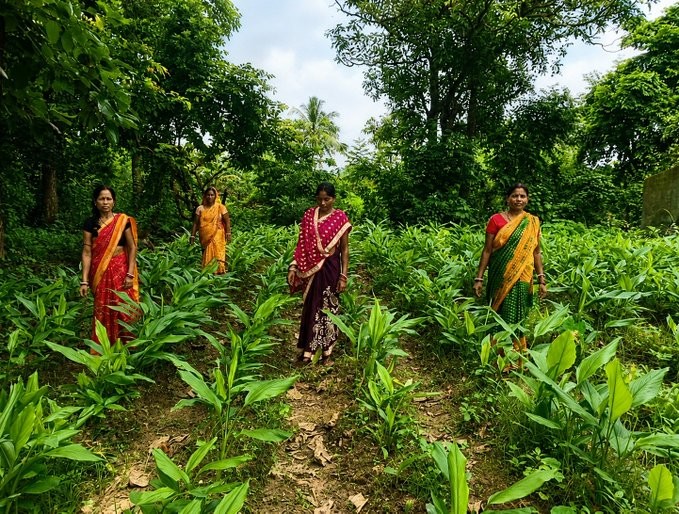
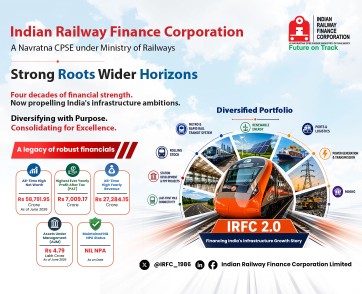
West Singhbhum, Jharkhand: A CSR intervention by the Indian Railway Finance Corporation (IRFC) is helping a women-led Farmer Producer Organisation (FPO) in Jharkhand diversify farm incomes and take its first steps towards building a complete turmeric value chain.
The initiative was recently highlighted by the Ministry of Agriculture & Farmers Welfare, which noted that Elangdolang Farmer Producer Co. Ltd., a women-led FPO in West Singhbhum with 2,705 farmer members, is cultivating turmeric as an intercrop using rhizomes provided through IRFC's CSR support.
The intervention is being implemented in West Singhbhum under the Prime Minister Dhan-Dhaanya Krishi Yojana (PM-DDKY), which focuses on improving agricultural productivity, encouraging crop diversification, strengthening post-harvest management and creating better market opportunities for farmers.
For Elangdolang's members, the support goes beyond introducing turmeric as an additional crop.
The CSR assistance has provided the critical starting input, turmeric rhizomes, while the FPO model offers a platform through which farmers can collectively produce, aggregate and eventually process and market the crop.
The larger objective is to develop a complete turmeric value chain, enabling farmers to move beyond the sale of raw produce towards activities such as aggregation, grading, processing, packaging, branding and market linkage.
This could allow a greater share of the value generated by turmeric to remain with farmers and their organisation.
The initiative also has a strong women-entrepreneurship dimension.
With Elangdolang being a women-led FPO, the development of the turmeric enterprise can create opportunities for women not only in cultivation but also in aggregation, processing, packaging, marketing and FPO management.
This makes the intervention relevant on two fronts: crop diversification at the farm level and enterprise development at the community level.
The initiative illustrates how CSR support can complement government-led agricultural development.
PM-DDKY seeks to address multiple constraints faced by farmers through a district-focused approach, including diversification, post-harvest infrastructure, irrigation, credit and market access. In this case, IRFC's CSR support is helping address the initial production-side requirement while the FPO provides the institutional structure for taking the crop towards value addition and markets.
The approach is particularly significant for districts where strengthening farmer institutions and creating locally anchored agricultural enterprises can have an impact beyond individual farm production.
The success of the initiative will ultimately depend on what happens after cultivation.
Building reliable aggregation, processing, quality management, packaging and market linkages will be critical to turning turmeric from an intercrop into a sustainable FPO-led enterprise.
For the 2,705 farmer members of Elangdolang, however, the intervention provides a starting point.
What began with turmeric rhizomes supported through IRFC's CSR initiative has the potential to evolve into a farmer-owned value chain, combining crop diversification with women-led entrepreneurship and greater value addition.
In that sense, the West Singhbhum initiative captures the larger promise of farmer collectives: not merely producing more, but capturing more value from what farmers produce.